

Backflow Testing
PLUMBING
Backflow Prevention Testing in Minneapolis and the Western Metro
Predictable Plumbing provides certified backflow prevention testing for homes and properties in Minneapolis and throughout the western Twin Cities. We test RP and RPZ assemblies, pressure vacuum breakers, double-check assemblies and other testable backflow preventers.
Your assembly will be tested using the proper test equipment. We document whether it passes or fails, update the test tag and complete the required testing paperwork.
Need a backflow test? Call Predictable Plumbing at (612) 900-2026 or schedule online.


-
Backflow prevention testing confirms that a backflow assembly can stop water from flowing in the wrong direction.
-
Backflow can happen when water pressure suddenly drops or when pressure from another system pushes water backward. Without proper protection, water from an irrigation system, boiler, fire sprinkler system or other connected equipment could enter the drinking-water supply.
-
A backflow test checks the internal valves and safety components that prevent this from happening.
Quick Answer: Who Provides Backflow Testing in the Western Twin Cities?
Predictable Plumbing provides certified backflow prevention assembly testing in Minneapolis and the western Twin Cities. We test RPZ, PVB, double-check and other testable backflow assemblies, document the results and complete required testing records.
Every test is performed by an experienced plumbing professional who understands both the assembly and the plumbing system connected to it.

PLUMBING
Backflow Assemblies We Test
-
RP and RPZ Backflow Preventers
-
A reduced-pressure principle assembly is commonly called an RP, RPZ or reduced-pressure-zone backflow preventer. It contains two check valves and a relief valve that opens when the assembly cannot maintain the required pressure difference.
-
RPZ assemblies are commonly used where contamination could create a health risk. They may protect boiler makeup water, irrigation systems, fire protection piping and other connections to potable water.
-
We test the check valves and relief valve to determine whether the assembly meets the required performance standards.
-
PVB Pressure Vacuum Breakers
-
A pressure vacuum breaker, or PVB, protects against backsiphonage. PVB assemblies are commonly installed on lawn irrigation and sprinkler systems.
-
Testing verifies that the air-inlet valve and check valve open and close correctly. PVB assemblies can fail because of freezing, debris, worn rubber components or damage during seasonal startup.
.png)
-
Double-Check Valve Assemblies
-
A double-check valve assembly, often abbreviated DCVA or DC, contains two independently operating check valves. These assemblies are generally used for lower-hazard applications where protection against both backsiphonage and backpressure is needed.
-
Testing measures the performance of both check valves.
-
Detector Assemblies and Other Testable Devices
-
Depending on the installation, we can also test:
-
Reduced-pressure detector assemblies
-
Double-check detector assemblies
-
Spill-resistant vacuum breakers
-
Testable assemblies serving irrigation systems
-
Assemblies connected to hydronic heating or boiler systems
-
Other approved testable backflow prevention assemblies
-
Not sure what type of assembly you have? Send us a clear picture of the device and its identification tag. We can usually identify the assembly before your appointment.
What Is Included in a Backflow Test?
What Is Included in a Backflow Test?
A standard backflow prevention test includes:
-
Visual inspection of the accessible assembly
-
Identification of the assembly type, manufacturer and model
-
Inspection of the shutoff valves and test cocks
-
Connection of backflow testing equipment
-
Testing of each check valve
-
Testing of the relief valve or air-inlet valve when applicable
-
Pass-or-fail results
-
Completion of the test tag
-
Preparation of required testing documentation
-
Submission of records when required by the local authority or water supplier
The protected water line may need to be shut off briefly during testing. We will let you know before interrupting service.
Minnesota Backflow Testing Requirements
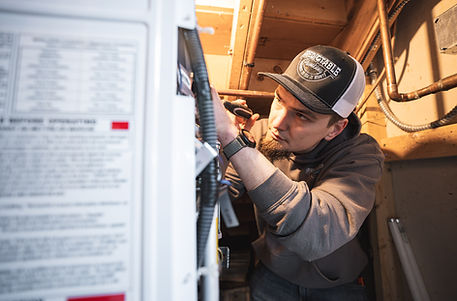
The Minnesota Plumbing Code requires testable backflow prevention assemblies to be tested when installed, repaired or relocated and at least once each year afterward. A city, water supplier or other authority may require more frequent testing.
Testing must be performed by a certified backflow prevention assembly tester. Test and maintenance records may also need to be submitted to the local authority and public water supplier.
If you received a testing notice from your city or water provider, send us a copy when scheduling. This helps us identify the assembly and determine where the completed report must be submitted.
Why Backflow Assemblies Fail
A backflow preventer can look normal from the outside and still fail its test. Common causes include:
-
Dirt or debris caught in a check valve
-
Worn check-valve rubber
-
A relief valve that opens too early
-
A relief valve that does not open
-
Mineral buildup inside the assembly
-
Leaking or seized shutoff valves
-
Freeze damage to an irrigation PVB
-
Internal springs that have weakened or broken
-
Damage caused by age or lack of use
Testing measures how the assembly actually operates. It is more than a visual inspection.
What Happens if the Assembly Fails?
If the backflow preventer fails, we will explain which part of the test it did not pass and what will likely be needed next.
The standard testing charge does not include replacement parts or a complete rebuild. Any additional repair or replacement work will be discussed and priced separately before it begins.
After the required correction is completed, the assembly must be retested to confirm that it passes.
Backflow Testing for Irrigation Systems
Lawn irrigation systems are one of the most common places to find a testable backflow preventer. These systems are exposed to soil, fertilizer, pesticides, standing water and other outdoor contaminants.
A PVB or RPZ used for irrigation should be installed, pressurized and accessible when the test is performed. If the irrigation system has been winterized or the assembly has been removed for the season, it may need to be reinstalled and placed into service before it can be tested.
Backflow Testing for Boiler Systems
A boiler fill connection creates a connection between drinking water and a closed hydronic heating system. Boiler water may contain corrosion, sediment, treatment chemicals or glycol.
The correct backflow protection depends on the system and the potential hazard. When a testable assembly is installed, regular testing confirms that it continues to separate the heating system from the potable water supply.
Predictable Plumbing works extensively with boilers and hydronic heating systems, so we understand the equipment on both sides of the backflow assembly.
Certified Testing With Clear Documentation
Backflow testing is not complete until the results are properly recorded.
Predictable Plumbing provides clear test results and completes the required documentation for the assembly tested. If the city or water supplier has its own form or online reporting system, provide that information when scheduling.
Our goal is simple: test the assembly correctly, document the result and make the process easy for the property owner.
Backflow Testing Service Area
Predictable Plumbing provides backflow prevention testing in Minneapolis and communities throughout the western Twin Cities, including:
-
Loretto
-
Medina
-
Corcoran
-
Maple Plain
-
Independence
-
Greenfield
-
Delano
-
Plymouth
-
Minnetonka
-
Maple Grove
-
Orono
-
Buffalo
-
Brooklyn Park
-
Edina
-
Nearby western metro communities
Schedule Your Backflow Prevention Test
If your annual backflow test is due or you received a notice from your city or water supplier, Predictable Plumbing can test the assembly and complete the required documentation.
Please have the testing notice available if you received one. If possible, also provide a picture of the backflow preventer and its identification tag.
Call (612) 900-2026 or schedule your backflow test online.
Frequently Asked Questions
How often does a backflow preventer need to be tested in Minnesota?
Testable backflow prevention assemblies must generally be tested when installed, repaired or relocated and at least annually afterward. The local authority or water supplier may require more frequent testing.
Can Predictable Plumbing test an RPZ backflow preventer?
Yes. Predictable Plumbing tests reduced-pressure principle assemblies, commonly called RP, RPZ or reduced-pressure-zone backflow preventers.
Can you test a pressure vacuum breaker?
Yes. We test pressure vacuum breakers, commonly called PVBs. They are frequently used on lawn irrigation and sprinkler systems.
Is a PRV the same as a PVB?
No. A PRV is normally a pressure-reducing valve that controls water pressure. A PVB is a pressure vacuum breaker used to prevent backflow. If you are unsure which device you have, send us a picture.
Does every backflow preventer require annual testing?
Annual testing applies to testable backflow prevention assemblies. Some simple backflow devices, such as certain hose vacuum breakers, are not field-tested in the same way. We can help identify the type of protection installed at your property.
Will the water need to be turned off?
The water serving the protected system normally needs to be shut off briefly during testing. This does not always require shutting down water to the entire building.
What if my backflow assembly fails?
We will explain the test results and identify the next step. Repairs, replacement parts and rebuilding are separate from the standard testing service. The assembly must be retested after corrective work.
How much does a backflow test cost?
Pricing depends on the type and number of assemblies, accessibility, location and reporting requirements. Predictable Plumbing provides clear pricing before the scheduled testing work begins.
What information should I provide when scheduling?
Provide the property address, a copy of any testing notice and, if possible, a picture of the assembly and its identification tag. This helps us prepare the correct paperwork before arriving.